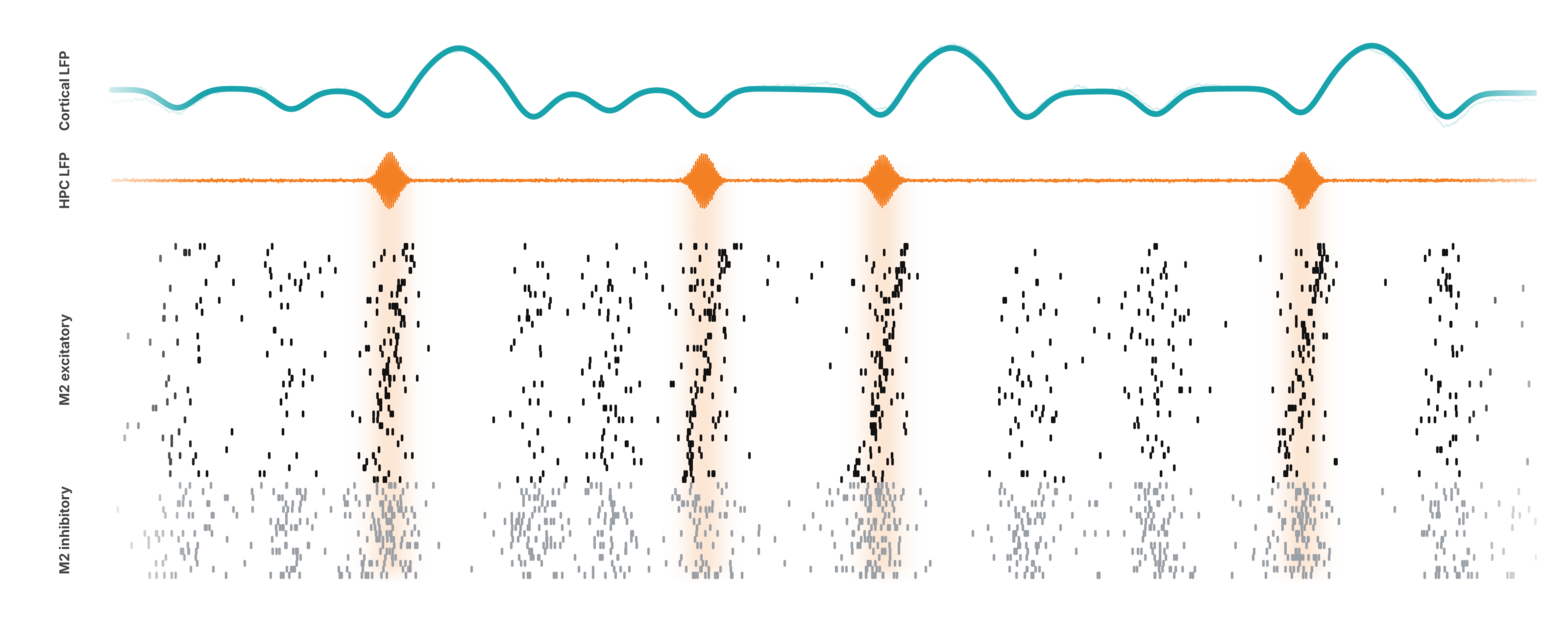
Schematic: hippocampal ripples and ripple-locked reactivation in M2 during sleep
Inhibitory interneurons make up a minority of cortical neurons, yet they play a critical role in shaping the flow of information in cortical circuits. Our work seeks to understand how inhibition supports learning, how stimulation can recruit it, and how it can be targeted to improve recovery.
Tools: unlocking cell identity in electrophysiological recordings
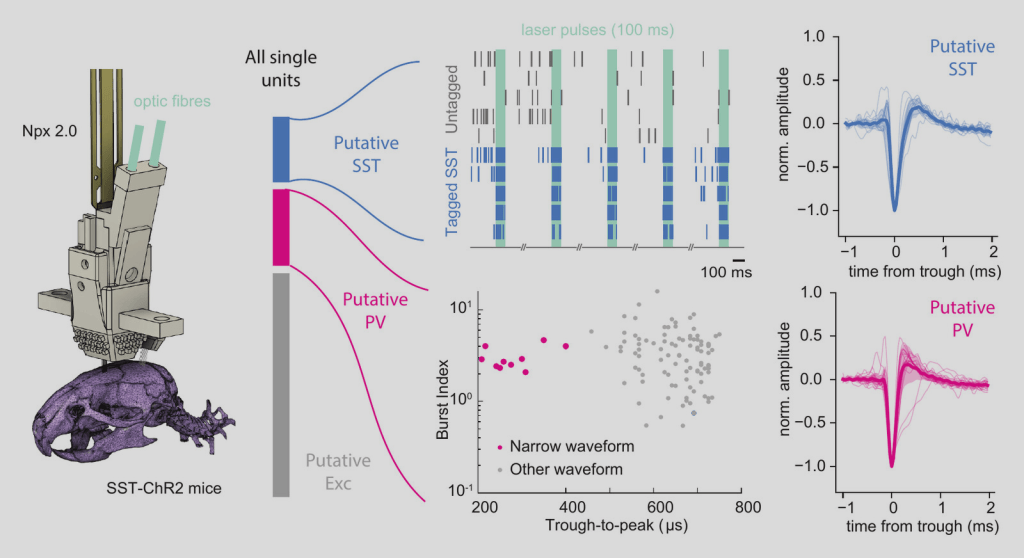
We combine optotagging with computational analyses of waveform shape and spiking patterns to identify inhibitory neurons in large-scale, multi-site electrophysiological recordings.
Learning: inhibitory circuits in skill acquisition
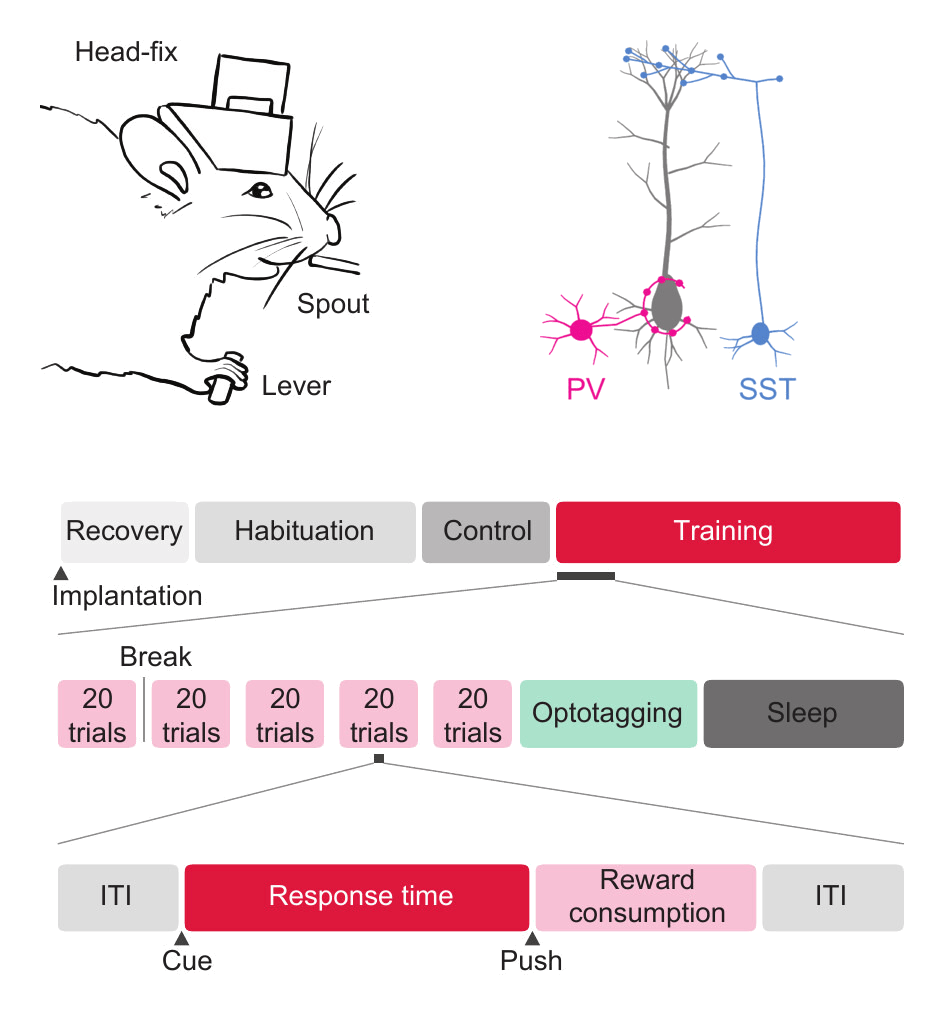
We aim to uncover how inhibitory circuits shape cortical activity as animals acquire new motor skills. Using electrophysiology (see above) or calcium imaging, we record the activity of genetically defined inhibitory cell types across days of learning. By following these cells through both behavior and sleep, we ask how cell type-specific inhibition (1) facilitates learning during practice and (2) regulates plasticity during sleep.
Stimulation: neuromodulation designed to recruit inhibition
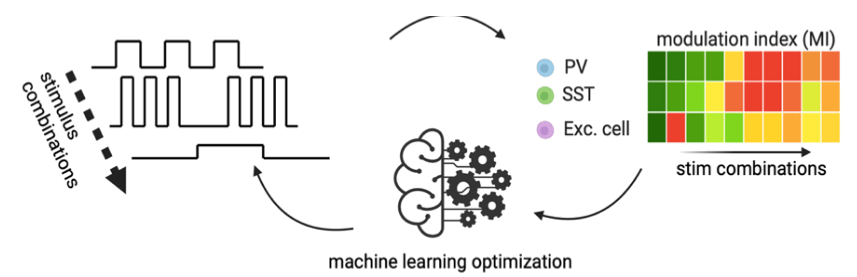
Current neuromodulation techniques recruit broad brain regions rather than specific circuits and cell types. We aim to identify principles for more precise neuromodulation, tailored to recruit specific inhibitory cells. Using the same recording approaches, we measure how genetically defined cell types respond to stimulation, then develop protocols that differentially recruit them.
Recovery: inhibition after stroke
After stroke and brain injury, the balance between excitation and inhibition in surviving circuits is disrupted, and the resulting changes in inhibition may limit recovery. A key part of our mission is to understand how cell type-specific inhibition becomes dysregulated in the post-stroke brain and, importantly, whether restoring normal inhibitory patterns can enhance recovery.

